3 min read
When you hear the term self-care, do you picture scented candles, spa days, or a relaxing holiday? You’re not alone. But evidence-based self-care goes far beyond occasional indulgence.
By Dr. Maria K. Jimmy
The World Health Organization (WHO) defines self-care as the ability of individuals, families and communities to promote health, prevent disease, maintain health, and cope with illness, with or without the support of a healthcare provider.
Here are ten self-care practices consistently recommended by doctors and supported by decades of medical research.
1. Prioritise Good-Quality Sleep
Sleep is an active biological process during which the brain:
- Consolidates memories
- Repairs tissues
- Regulates hormones
- Supports immune function
Most adults should aim for 7–9 hours of good-quality sleep each night.
Chronic sleep deprivation has been linked to several illnesses including type 2 diabetes, hypertension, depression, cardiovascular disease, and even gut issues like IBD.
Healthy sleep habits include:
- Maintaining a consistent bedtime
- Limiting caffeine later in the day
- Avoiding bright screens before sleep
- Keeping the bedroom cool, dark and quiet
2. Move Your Body Every Day
Remember that movement does not necessarily mean going to the gym. Walking, dancing, swimming, cycling and gardening all count.
Try 150 minutes of brisk walking a week, or 75 minutes of running. Try to perform strength-training exercises at least twice a week.
Exercise is one of the most evidence-based ways to:
- Improve mood
- Lower anxiety
- Burn sugar out of your blood
- Strengthen bones and muscles
3. Eat Mostly Whole Foods
Remember: no single “superfood” determines your health. Instead, focus on sustainable eating habits.
Make sure you eat food rich in:
- Vegetables
- Fruits
- Whole grains
- Legumes
- Nuts
- Seeds
- Lean proteins
- Healthy fats
Limiting ultra-processed foods, excess salt, sugary beverages and trans fats is important to reduce long-term disease risk.
4. Stay Hydrated
While the “8 glasses a day” rule is not universally applicable, drinking enough water that your urine remains pale yellow will help.
Remember that fluid requirements do vary depending on age, climate, illness and activity level.
Tip: Older adults lose their thirst reflex, so if you are over 65, set a timer to sip water hourly.
5. Protect Your Mental Health
Give mental health the same attention as physical health. Stress, sadness, and burnout are all biological alarms. Sometimes it even causes physical symptoms.
Evidence supports practices such as:
- Mindfulness
- Stress management
- Maintaining meaningful relationships
- Seeking professional help when needed
- Taking regular breaks from chronic stress
If you wouldn’t ignore a bleeding cut, don’t ignore persistent anxiety or exhaustion. Talk to someone, or attend therapy if required.
6. Build Strong Social Connections
Meaningful social connection has been associated with lower stress levels, while excessive social media use may contribute to stress and poorer mental wellbeing.
Sometimes, a 10-minute phone call with someone you love can do far more for your mood than endless scrolling.
Loneliness is increasingly recognised as a significant public health concern.
Strong social relationships are associated with:
- Better mental health
- Lower mortality
- Reduced cardiovascular risk
- Improved resilience during illness
Even regular conversations with friends or family can positively influence overall wellbeing.
7. Keep Up With Preventive Healthcare
It’s important to know when professional healthcare is necessary for you.
This means:
- Routine health check-ups
- Vaccinations
- Cancer screening where appropriate
- Blood pressure monitoring
- Blood sugar testing for those at risk
- Dental and eye examinations
8. Avoid Tobacco and Limit Alcohol
There is no “safe” level of smoking. Smoking remains one of the leading preventable causes of premature death worldwide.
And with respect to alcohol; the less you drink, the lower your health risks.
9. Spend Time Outdoors
Think of it this way: your morning coffee tastes better when drunk outside.
Exposure to natural environments has been associated with:
- Lower stress levels
- Improved mood
- Better concentration
- Increased physical activity
Morning sunlight helps regulate your body’s internal clock, boosts mood and supports healthy melatonin production later in the evening.
10. Listen to Your Body
Perhaps the most overlooked aspect of self-care is recognising when something feels wrong.
Never ignore persistent symptoms such as unexplained weight loss, prolonged fatigue, chest pain, abnormal bleeding or persistent fever.
Self-care does not mean self-diagnosing or self-treating. Sometimes, the healthiest decision is seeking medical advice promptly.
Self-care For Every Day
Evidence-based self-care is an everyday practice. Some of the most powerful medicines you’ll ever take are the habits you practise every day.
This International Self-Care Day, remember that better health begins with small, consistent self-care habits.
Resources
- World Health Organization. WHO guideline on self-care interventions for health and well-being. Geneva: WHO; 2022.
- World Health Organization. WHO guidelines on physical activity and sedentary behaviour. Geneva: WHO; 2020.
- American College of Lifestyle Medicine. Lifestyle medicine core competencies. Chesterfield, MO: ACLM; 2022.
- Loscalzo J, Fauci A, Kasper D, et al., editors. Harrison’s principles of internal medicine. 22nd ed. New York: McGraw Hill; 2022.
- Libby P, Bonow RO, Mann DL, et al., editors. Braunwald’s heart disease: a textbook of cardiovascular medicine. 12th ed. Philadelphia: Elsevier; 2021.
- Hall JE, Hall ME, editors. Guyton and Hall textbook of medical physiology. 15th ed. Philadelphia: Elsevier; 2020.
- Melmed S, Auchus RJ, Goldfine AB, et al., editors. Williams textbook of endocrinology. 15th ed. Philadelphia: Elsevier; 2024.
- American Heart Association. Life’s essential 8. Dallas: AHA; 2022.
- National Sleep Foundation. National Sleep Foundation’s sleep time duration recommendations: methodology and results summary. Sleep Health. 2015;1(1):40-43.
- The Lancet Commission. Global health and physical activity. Lancet. 2021;398(10298):429-442.
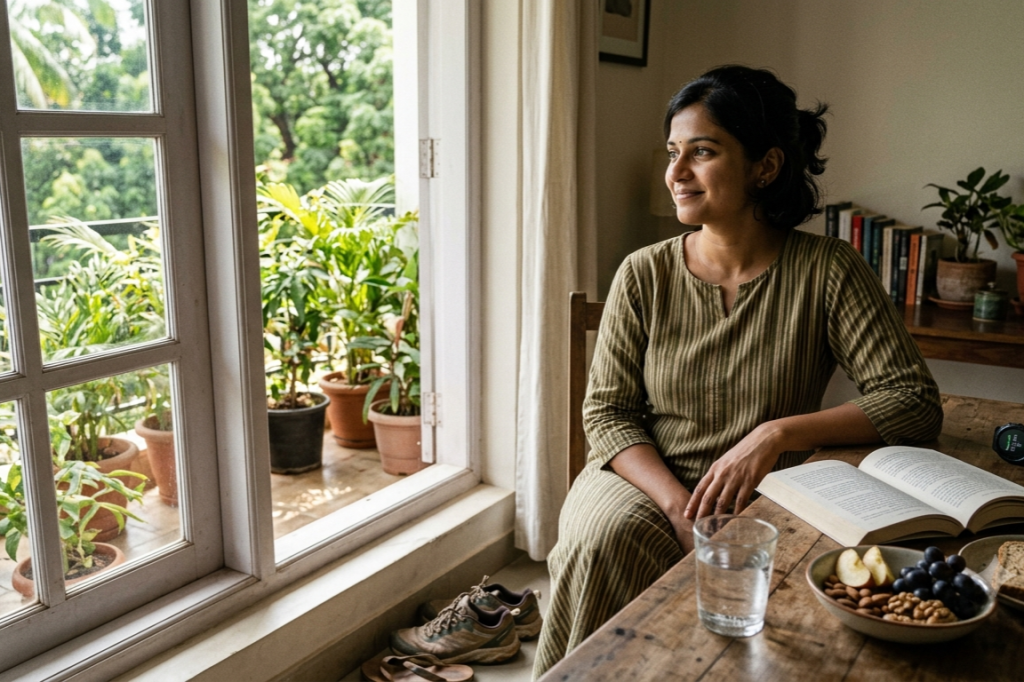
Image Note: The accompanying image is an AI-generated illustration. The person and setting depicted are fictional and do not represent any real individual or location.
You may wish to read these next:

