
4 min read
History will remember why students gathered at the Jantar Mantar protest in July 2026. This article explores, through a doctor’s lens, what an average protester’s body might have experienced during the peaceful protest, drawing on publicly reported events and established medical science.
By Dr. Maria K. Jimmy
A Body Under Strain
Days of prolonged standing, walking between protest sites, sleeping on hard surfaces or in raincoats, disrupted sleep, irregular meals and inadequate hydration gradually drain the body’s energy reserves.
Muscles begin to recover less efficiently, glycogen stores become depleted and reaction times slow.
Delhi’s July heat, humidity and intermittent monsoon showers would have made dehydration even more likely, leading to the well-known effects of dehydration on the body, including headaches, dizziness, tiredness, and poorer physical performance.
Rather than one major injury, the body was dealing with many smaller physical stresses at the same time, each adding to the next.
The Brain in Survival Mode
Students participating in a peaceful protest for a future they deeply believed in were likely carrying a mix of hope, determination, uncertainty and anxiety.
That emotional investment, combined with prolonged stress, becomes a physiological stress response, activating the body’s natural fight-or-flight response even in the absence of physical danger.
The brain releases stress hormones such as adrenaline and noradrenaline, causing the heart to beat faster, breathing to quicken and blood pressure to rise. At the same time, digestion slows, which is why many people lose their appetite during periods of intense stress.
Levels of cortisol, the body’s main stress hormone, also remain elevated.
For many, the protest was as mentally demanding as it was physically exhausting.
The Musculoskeletal Cost of Endurance
The human body is designed to move, but not to stand continuously for hours or sleep on hard ground night after night.
Prolonged standing increases pressure within the veins of the lower limbs, producing aching calves, swollen feet and dizziness.
Continuous walking places repetitive stress on the knees, ankles and feet, often leading to blisters, muscle soreness and lower back pain.
Poor sleeping conditions also prevent the muscles from recovering properly, often resulting in neck, shoulder and back discomfort.
By the end of several days, many demonstrators would likely have experienced the widespread muscle soreness commonly seen after prolonged physical exertion.
The Body Against the Elements
The environment itself became another challenge.
Spending days outdoors in Delhi’s July heat, humidity and monsoon rain places significant stress on the body.
Wet clothes, damp bedding and constant sweating can cause skin irritation, chafing and fungal infections, while heat and dehydration contribute to headaches, dizziness and worsening fatigue.
Crowded settings also increase exposure to respiratory viruses and other infectious illnesses, especially when the body is already tired.
To simply cope with these conditions, the body spends enormous energy.
The Medical Consequences of a Police Crackdown
The police lathi charges brought an entirely different physiological challenge.
Many protesters stood their ground despite the escalating situation, while others helped injured friends and fellow protesters instead of leaving. Acts of courage like these often mean pushing beyond the body’s instinct to seek immediate safety.
When a peaceful crowd suddenly faces violence, the brain activates the fight-or-flight response. Adrenaline surges, the heart beats faster, breathing quickens and muscles tense.
Many experience trembling, dizziness, nausea, hyperventilation and difficulty thinking clearly.
National reporting documented baton charges, while journalists, protesters and public figures also reported the use of tear gas and pellet injuries.
Medically, lathi blows can cause bruises, abrasions, muscle injuries, ligament damage and fractures. Tear gas exposure may irritate the eyes, skin and airways, while pellet injuries, particularly to the face and eyes, carry a risk of severe ocular trauma.
There were also allegations that some female students were inappropriately touched during the crackdown, experiences that can result in significant psychological trauma even without visible physical injuries.
Some of the deepest wounds are invisible. Witnessing or experiencing violence can leave lasting effects, including disturbed sleep, persistent body pain, intrusive memories and heightened anxiety long after the protest ends.
Recovery Does Not Begin When the Protest Ends
The human body possesses remarkable resilience, but recovery takes time.
Sore muscles need days to recover, bruises gradually fade, and sleep lost over several nights cannot be repaid in one. The mind also needs time. Stress hormones return to normal only when the brain no longer senses danger.
For some students, recovery may have taken a few days. For others, especially those who were injured or witnessed distressing events, the physical and emotional effects may have lasted much longer.
Recognising the Human Cost
Behind the Jantar Mantar protest were Indians who chose to endure discomfort, exhaustion and uncertainty while standing up for what they believed would benefit all the citizens of democratic India.
Understanding what their bodies may have endured is, perhaps, another way of recognising the courage they demonstrated.
A Note from the Author
I applaud the students who peacefully stood up for what they believed would benefit their fellow citizens. Their courage, resilience and solidarity deserve recognition.
This is not an eyewitness account. It is a medical explainer based on publicly reported events and established medical science.
This is not to suggest that every student experienced all of these effects. Each person’s experience would have varied depending on their health, level of exposure and individual circumstances.
My intention is simply to help the public better appreciate the physical and psychological toll a prolonged public protest can take on those who participate.
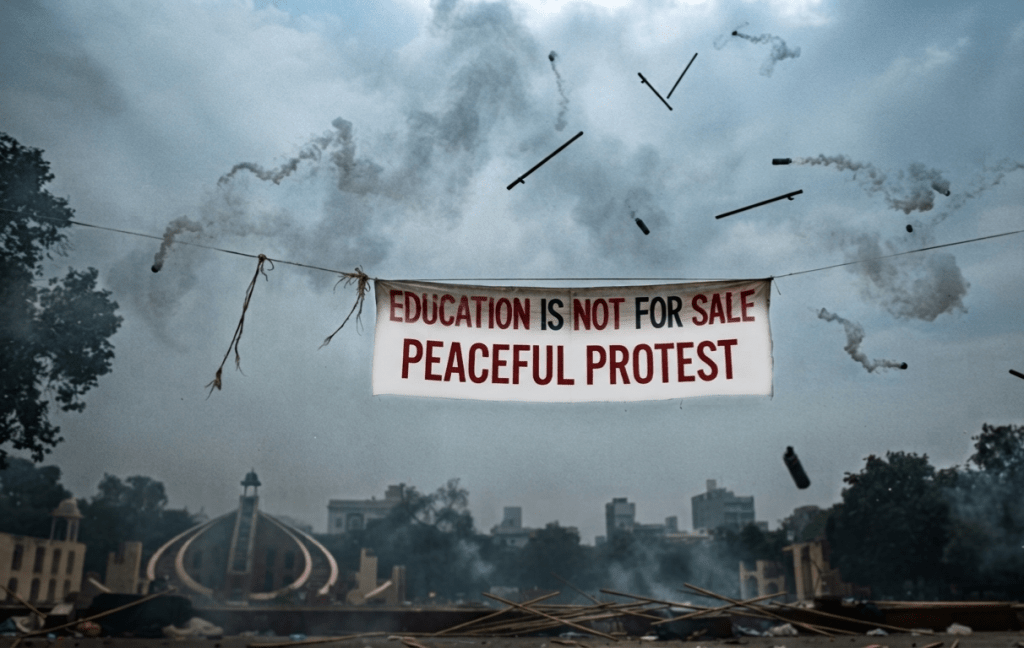
Image Note: The accompanying image is an AI-generated illustration, and is used to indicate the Jantar Mantar protest.
You may wish to read these next:
 Dr. Maria K. Jimmy