
3 min read
This Doctor’s Day, I found myself reflecting on a side of medicine that is rarely spoken about. Beyond the prescriptions, investigations, and hospital corridors lies a side of medicine that shapes the daily lives of doctors across India.
By Dr. Maria K. Jimmy
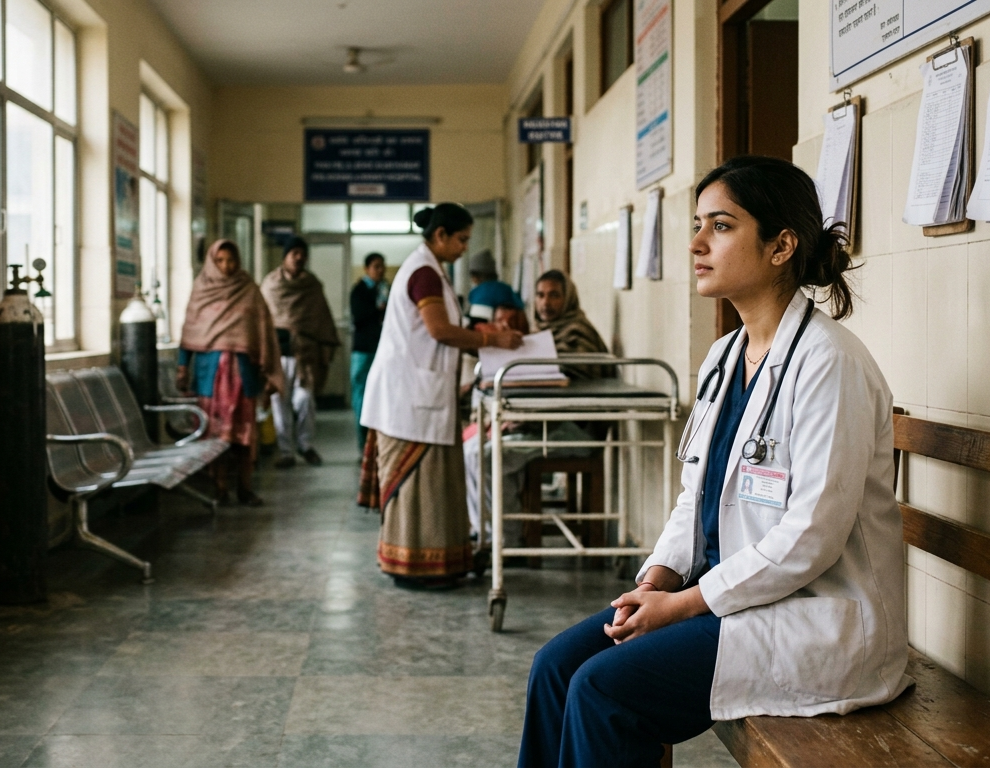
When most people think of doctors, they think of white coats, stethoscopes, prescriptions, and hospital corridors.
Yet medicine extends far beyond diagnoses and treatment plans.
Behind every consultation is a human being navigating responsibility, uncertainty, difficult decisions, and the realities of working within an imperfect healthcare system.
We Remember More Than You Might Expect
Patients sometimes assume that doctors see so many people that each consultation blends into the next.
Many doctors remember difficult diagnoses, unexpected recoveries, and conversations that stay with them long after a clinic ends. We remember the child who gradually got better, the patient who faced illness with remarkable courage, and sometimes the people we could not help in the way we hoped.
Medicine involves science, but it is also built on human encounters. Some of those encounters leave a lasting impression.
Even though a consultation may last only a few minutes, some stories can last much longer.
The Hours You Do Not See
Healthcare does not stop when the sun goes down.
Doctors, particularly those working in emergency departments and inpatient wards, often work shifts that stretch far beyond what most people would consider normal working hours. Twenty-four-hour and thirty-six-hour duties are common, and some shifts may extend even longer.
These long shifts remain a familiar reality for many doctors working in India’s healthcare system.
A tired doctor may occasionally need a moment to gather their thoughts before beginning a consultation. Yet when a genuine emergency arrives, training takes over. Doctors prioritise the patient in front of them, seek help from colleagues and senior clinicians when necessary, and focus on providing the best care possible despite fatigue or uncertainty.
Patients do not always see the interrupted meals, missed sleep, long nights, or the toll that years of such work can take on a healthcare worker’s own health.
The Conditions Behind the Care
When people picture a medical consultation, they often imagine a private room, adequate support staff, and a healthcare system designed to make care as smooth as possible.
Across India, many doctors work in overcrowded hospitals, understaffed departments, and resource-limited settings. Consultations may take place in spaces that offer little privacy, and doctors are often expected to manage difficult situations with limited support.
For female doctors, there can be additional challenges. While most patient interactions are respectful, some healthcare professionals have experienced inappropriate behaviour, harassment, or situations that left them feeling unsafe.
The Years Behind the White Coat
For doctors, the journey into medicine begins in adolescence and continues through years of demanding study, examinations, clinical postings, and training. By the time a doctor completes an MBBS degree, many friends from other professions may already be earning, building careers, or settling into family life.
Some doctors go on to pursue postgraduate training. Others choose to work as general practitioners or medical officers. These decisions are shaped by many factors, including personal circumstances, mental health, financial responsibilities, and years of continuous study.
What is sometimes forgotten is that an MBBS degree itself represents years of rigorous training and qualifies a doctor to diagnose illness, prescribe treatment, and care for patients safely and responsibly.
While specialists undergo additional training in specific fields, every doctor begins with the same foundation of medical education and clinical responsibility.
The Weight of Responsibility
In reality, medicine frequently involves uncertainty.
- Symptoms do not always follow textbook patterns
- Tests do not always provide immediate clarity
- Treatments do not always work as expected
Doctors are trained to make decisions despite uncertainty, but that does not mean uncertainty disappears. Many healthcare professionals spend considerable time reflecting on difficult cases and wondering whether there was something they may have missed.
The Moments That Matter
Healthcare systems across India continue to face immense pressure.
Long waiting times, crowded hospitals, limited resources, and rising expectations can leave both patients and healthcare workers feeling frustrated.
These challenges can place strain on the doctor-patient relationship, even when both sides share the same goal: better health outcomes.
Yet despite these challenges, meaningful interactions continue to happen every day.
This Doctor’s Day, perhaps the most important reflection is a simple one: behind every consultation are two human beings, each carrying concerns that may not be immediately visible to the other.
When both sides remember the humanity of the other, healthcare becomes more than treatment. It becomes a partnership built on trust, compassion, and shared purpose.
Image Note: The accompanying image is an AI-generated illustration. The doctor, patients, hospital setting, and all individuals depicted are fictional and do not represent real people or actual healthcare facilities.
You may wish to read these next:

