
1 min read
This mini article is part of The Unprescribed, a series of reflections on the prescriptions doctors wish they could write, but never do. Shared on Sundays.
By Dr. Maria K. Jimmy
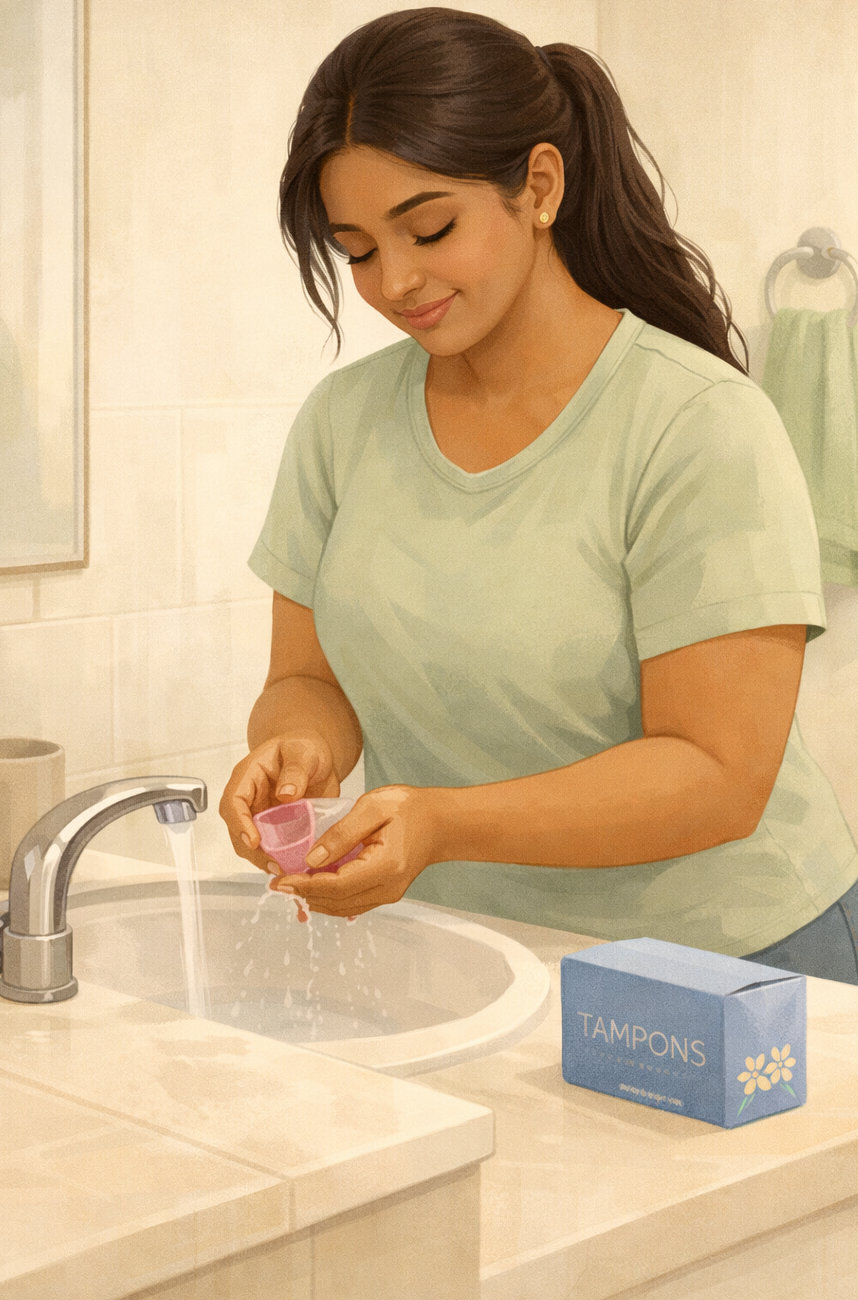
These doctor-backed menstrual hygiene tips focus on what matters for your body, comfort, and long-term health:
1. Your Vagina Is Self-Cleaning, But Not Your Vulva
You don’t need to clean inside the vagina. Douching and scented products disrupt the vaginal microbiome and vaginal pH.
However, your vulva (external area) needs proper vulva care.
How to wash the vulva:
- Wash with water and a clean cotton cloth
- Always wipe front to back
- Keep your hands clean before and after
- A mild, pH-balanced intimate wash (pH ~4.5–5) is okay for external use, especially during heavy flow
2. Change Every 4–6 Hours – No Excuses
Old blood attracts bacteria. Good period hygiene means changing pads, tampons, or period underwear regularly.
Never exceed 8 hours with a tampon; this is essential for tampon safety due to the risk of Toxic Shock Syndrome, a rare infection causing sudden fever, low blood pressure, and organ damage.
3. Be Cautious with Newer Products
Menstrual cups, discs, and reusable pads are sustainable period products, but not all brands are tested.
Make sure you:
- Stick to medical-grade silicone or certified materials
- Follow proper cleaning and storage
- Avoid fragranced or “cooling” products; they can cause rashes and bacterial vaginosis (an imbalance of normal vaginal bacteria).
4. Dispose Properly. Don’t Flush
How to dispose of your pads properly:
- Do not flush pads or tampons; they block pipes and harm the environment
- Wrap used pads in toilet paper or a small bag before disposal
- Throw them in a covered bin
- Keep the surrounding area clean to reduce the spread of germs
5. Track Your Cycle, Know Your Normal
- Note your period dates every month, or whenever you get them.
- Use a period tracker app if possible.
- If you have severe pain or very heavy bleeding, consult your gynaecologist.
- Also watch for irregular cycles, missed periods, or bleeding between periods.
Good menstrual hygiene is also about knowing when something’s off.
References
- UpToDate – Vaginal microbiome & hygiene (2024)
- CDC – Menstrual hygiene & TSS prevention (2023)
- Lancet Public Health – Menstrual cup safety (2019)
The Unprescribed / Advice that never makes it onto the prescription note.

