
4 min read
By Dr. Maria K. Jimmy
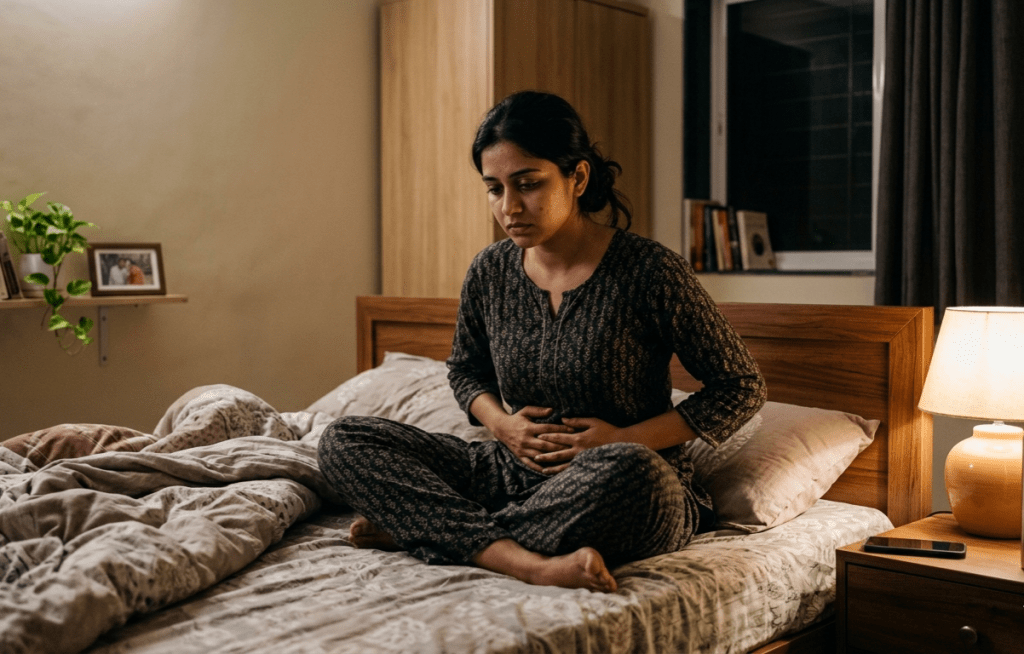
If you live with inflammatory bowel disease (IBD), such as Crohn’s disease or ulcerative colitis, you may have noticed this pattern: a bad night’s sleep often leads to a worse day.
But what if poor sleep doesn’t just accompany flares? What if it contributes to triggering them?
New research from 2025–2026 is beginning to explain the biological chain reaction linking sleep loss to gut inflammation. Even more interestingly, it also highlights two non-drug approaches that may help interrupt that cycle.
Let’s walk through the science, and then what you can do about it.
The Gut-Sleep Connection: A Biological Chain Reaction
Think of your brain and gut as constantly communicating through a major pathway, the vagus nerve.
A 2026 study from the University of California, Irvine found something surprising. When sleep is repeatedly disturbed, the brain sends the wrong kind of signals to the gut.
Over time, these signals can trigger oxidative stress, a form of cellular damage, in intestinal stem cells.
So why does this matter?
Stem cells are your gut’s repair crew. They work continuously to heal small injuries in your intestinal lining. But when sleep disruption affects them:
- The gut lining struggles to heal
- The protective barrier weakens (sometimes described as “leaky gut”)
- Inflammation rises
- Flare-ups become more likely
Simply put, poor sleep does more than leave you tired. It can affect how well your gut heals.
How Poor Sleep Increases IBD Risk: What Studies Show
Interestingly, larger population studies consistently support this link. And while the numbers may sound a bit technical, they tell an important story:
A 2025–2026 cohort study of over 250,000 people found that unhealthy sleep patterns were associated with a 33% higher risk of Crohn’s disease and a 25% higher risk of ulcerative colitis, compared to healthy sleepers.
A meta-analysis showed that poor sleep was linked to a 63% higher risk of IBD flares or hospitalisation, particularly in Crohn’s disease.
Together, these findings show that sleep affects inflammation and disease activity.
New Therapies That Target Both Sleep and Gut Health
Understanding the problem is one step. The next is knowing what might help.
Recent research has highlighted two approaches that may support both sleep and gut health: one biological and one behavioural.
1. Melatonin: More Than a Sleep Hormone
Have you ever considered taking melatonin for sleep, or had someone recommend it to you?
Melatonin is the hormone your brain releases in darkness to regulate sleep. But interestingly, your gut also responds to melatonin, which means it may influence inflammation as well.
A 2026 randomised controlled trial published in the Journal of Crohn’s and Colitis studied melatonin in people with IBD in remission. It found that those taking melatonin were more likely to remain in remission compared to those on placebo.
Early evidence suggests melatonin may:
- Calm immune cells (mast cells) in the gut
- Reduce inflammatory signalling
- Influence gut microbiota
However, this is still emerging evidence. A 2025 animal study suggested melatonin might worsen colitis in certain contexts. So it is not yet a routine treatment and should be discussed with a gastroenterologist.
2. CBT-I: Training Your Brain for Better Sleep
Have you heard of CBT for sleep?
Cognitive Behavioural Therapy for Insomnia (CBT-I) is a structured, non-drug programme that helps reset sleep habits and reduce sleep-related anxiety.
A 2025 pilot study published in Inflammatory Bowel Diseases looked at CBT-I in people with Crohn’s disease. It found that those who underwent CBT-I experienced:
- Improved sleep quality
- Reduced abdominal pain
- Fewer self-reported Crohn’s symptoms
It’s interesting that these improvements happened without directly treating the gut, highlighting how closely sleep and gut health are connected.
CBT-I is now available through therapists, online programmes, and apps, making it an accessible option for many.
What This Means for You (or for Those with IBD)
If you live with IBD, this changes how you look at your symptoms.
Sleep is not just something you “catch up on.” It is part of how your gut repairs, regulates inflammation, and stays stable.
This means:
- Sleep supports gut repair and immune balance
- Poor sleep may trigger flares, not just follow them
- Improving sleep may ease both fatigue and inflammation
A Hidden Factor: Undiagnosed Sleep Apnoea
Still tired even after a full night’s sleep?
Some people with IBD may have undiagnosed obstructive sleep apnoea (OSA), where breathing repeatedly pauses during sleep. It is more common in IBD and can quietly worsen inflammation.
Treating sleep apnoea can make a real difference. If fatigue sticks around despite treatment, your sleep might be trying to tell you something. It may be worth checking.
Simple, Science-Based Steps to Try Tonight
- Keep a consistent sleep schedule, even on weekends
- Reduce screen exposure at least 60 minutes before bed
- Limit caffeine after mid-day
- Pay attention to how you feel on waking, as it often reflects sleep quality
- Create a simple wind-down routine, such as reading, gentle stretching, or calming music
- If sleep problems continue, consider speaking to your doctor about: CBT-I and whether melatonin may be appropriate for you
A New Way to Understand IBD
For a long time, IBD was viewed mainly as a disease of the gut. But newer research points to something more connected:
Sleep disruption and gut inflammation often move together, each worsening the other.
Breaking this cycle, even in small ways, can make symptoms easier to manage.
Because sometimes, better sleep is part of how the body begins to heal.
Resources & Further Reading
- UC Irvine / Cell Stem Cell (2026) – Sleep disruption damages intestinal stem cells via vagus nerve signaling
- Journal of Crohn’s and Colitis (2026) – Melatonin improves clinical prognosis in IBD (RCT)
- Inflammatory Bowel Diseases (2025) – CBT-I improves sleep and symptoms in Crohn’s disease
- Journal of Digestive Diseases (2025) – Meta-analysis on sleep and IBD outcomes
- Gut (2025) – Circadian gene changes in IBD
- BMC Medicine (2026) – Sleep–inflammation links
- PLOS ONE (2025) – Sleep and gut microbiota rhythms
Disclaimer
This article is for educational purposes and does not replace individual medical advice. Always consult your gastroenterologist before starting any new supplement or therapy. The accompanying image is AI-generated, and used for illustrative purposes. It does not depict any real person.
You may wish to read these next:

