
1 min read
This mini article is part of The Unprescribed, a series of reflections on the prescriptions doctors wish they could write, but never do. Shared on Sundays.
By Dr. Maria K. Jimmy
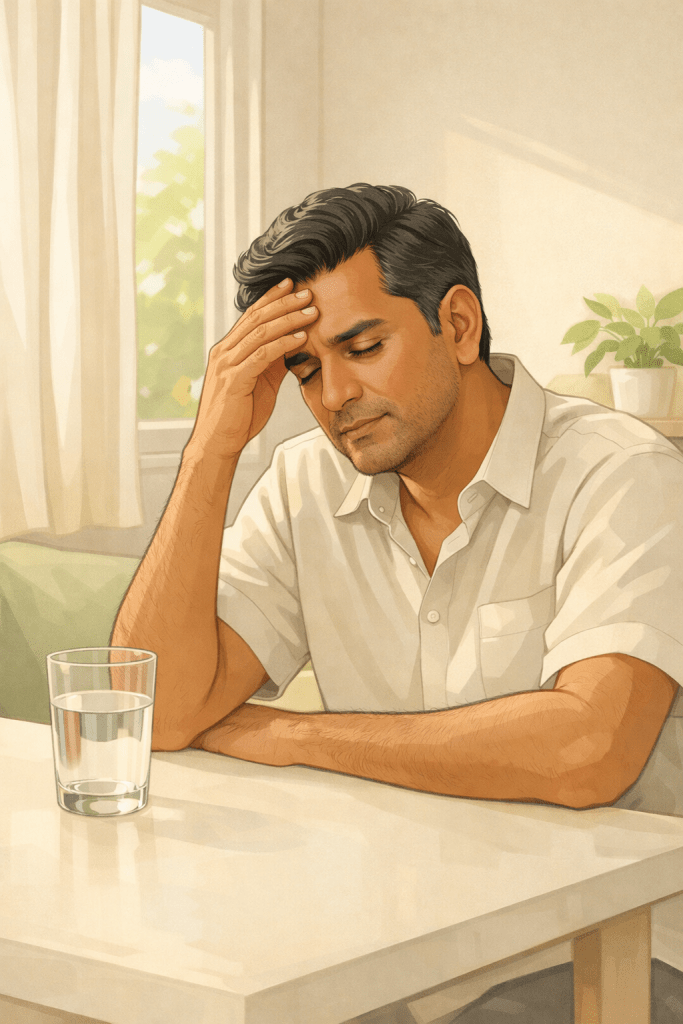
Summer’s here, and so are the headaches.
Have you ever stepped into the heat and wondered why your head starts pounding later?
The Mechanism: What’s Actually Happening
You probably know that your brain depends on a steady flow of oxygen-rich blood. However, in summer, two things disrupt this balance:
- Dehydration lowers blood volume, reducing blood flow to the brain
- Heat dilates blood vessels in the scalp and face, triggering headache and migraine pathways
The result is a throbbing, pulsating headache that often feels worse than a typical tension headache.
Here are effective steps to relieve summer headaches:
Step 1: Hydrate — But Do It Right
Not all fluids work the same. Plain water helps mild dehydration, but with sweating, your body also loses electrolytes like sodium and potassium.
Option A: Buttermilk (moru vellam) or coconut water.
Option B: ORS solution — store-bought or homemade (1 litre water + 6 tsp sugar + ½ tsp salt).
Avoid: Sugary sodas or excess tea, which can worsen dehydration.
Drink slowly. Have one glass, wait 10 minutes, and notice the response. If the throbbing eases, dehydration was likely the trigger.
Step 2: Cool the Vessels
Heat keeps blood vessels dilated, which contributes to the pounding sensation.
A cool, damp cloth placed on:
- The forehead
- The back of the neck
can help constrict these vessels and provide quick relief.
Sitting in shade, under a fan, or in a well-ventilated room also supports cooling.
Step 3: When to Worry — Signs of Heat-Related Illness
Some symptoms suggest heat-related illness rather than a simple headache or migraine:
- Confusion or disorientation
- Hot, dry skin with little or no sweating
- Nausea, dizziness, or fainting
These require urgent medical attention.
Keep Your Cool: Managing Summer Headaches
Enjoy the summer, but stay a step ahead of the heat.
The sun can be harsher than it feels. So listen to your body and take it slow when it asks you to.
The Unprescribed / Advice that never makes it onto the prescription note.

