
3 min read
Rare Disease Day is observed on the last day of February, a rare date chosen to reflect lives that often exist at the edges of visibility.
This article reflects on what living with rarity reveals about healthcare systems, legal responsibility, and ethical care.
By Dr. Maria K. Jimmy
As doctors, we are trained to look for patterns. We learn to recognise common symptoms, follow established protocols, and predict outcomes. Yet some of the most important lessons in medicine come from patients who do not fit any pattern at all — those living with rare diseases.
When Medicine Has No Pattern
Rare diseases challenge the very structure of modern healthcare.
In India, a rare disease is defined as one that affects fewer than 1 in 2,500 people. Individually, these conditions are uncommon. Collectively, however, they affect an estimated 70–96 million people across the country.
This contrast, rare in definition yet widespread in impact, shapes the first and most persistent challenge: recognition.
Facing the Contradiction
For many families, the journey begins with uncertainty. The path to diagnosis often unfolds across years, marked by multiple consultations, shifting explanations, repeated investigations, and unanswered questions.
This prolonged search carries a heavy cost.
Families face emotional exhaustion, financial strain, and the quiet distress of not knowing what lies ahead.
By the time a diagnosis is reached, many are already overwhelmed.
Policy as Recognition, Not Resolution
In response to these realities, the Government of India introduced the National Policy for Rare Diseases in 2021. From a clinical perspective, the policy represents a meaningful step.
It recognises rare diseases as a public health concern, categorises conditions for financial support, proposes Centres of Excellence, and encourages domestic research and treatment development.
From a legal standpoint, it gives clearer form to the right to health under Article 21 of the Constitution, particularly for communities living at the margins of healthcare visibility.
When Funding Meets Clinical Reality
However, despite its good intentions, the policy faces real-world limitations.
The financial support limit, often set at ₹50 lakhs per patient, may seem large at first. In practice, though, this amount can be exhausted within months for conditions requiring lifelong enzyme replacement therapies, which often cost several crores annually.
The policy also places responsibility for early diagnosis and management largely on state governments. This leads to uneven access, depending on where a patient lives.
Healthcare by Geography
As a result, families across India experience care differently. Some receive timely support, while others are left navigating complex systems on their own.
In many cases, families turn to the courts to seek life-saving treatment.
It is worth noting that these petitions are not acts of protest, but efforts to protect the right to life when other options feel out of reach.
Courts as a Last Resort
This brings us to a difficult ethical question that healthcare systems with limited resources must face:
How should care be fairly distributed?
The Ethical Question With No Easy Answer
On one side lies the principle of equity: the belief that every life deserves care, regardless of cost or rarity.
As a doctor, this principle feels instinctive. Every life carries equal value, regardless of the cost of treatment.
On the other side lies the principle of scale.
Public health decisions often focus on using limited resources where they can benefit the largest number of people, such as immunisation, maternal care, and treatment of common conditions like diabetes and hypertension.
Both perspectives carry moral weight.
Equity Versus Scale
This tension reflects systemic constraint rather than absence of compassion.
This is why the policy’s focus on prevention, early screening, genetic counselling, and local research matters so much.
Sustainable care depends on early diagnosis and affordable solutions, rather than funding that arrives only during emergencies.
What Rare Disease Day Asks of Us
As a doctor, my responsibility is to the patient in front of me. As a citizen, I recognise the wider public health landscape.
Rare Disease Day centres on visibility, dignity, and ensuring that rarity never translates into neglect. It is a call to move away from emergency-driven, court-dependent solutions and toward a healthcare system that is structured, sustainable, and fair.
The way forward requires strong medicine, thoughtful policy, ethical clarity, and shared responsibility.
That balance between care and constraint is the true cost of being rare.
Sources & Further Reading
- Ministry of Health & Family Welfare, Government of India: National Policy for Rare Diseases, 2021
- Organisation for Rare Diseases India (ORDI): Epidemiology and policy landscape of rare diseases in India
- Supreme Court of India & High Court judgments: Interpretations of Article 21 and access to life-saving treatment
- World Health Organization (WHO): Rare diseases and health system challenges
Author’s Note: This piece explores the complexities that arise when policy meets clinical reality, with respect for the many constraints involved. The views expressed reflect the author’s perspective.
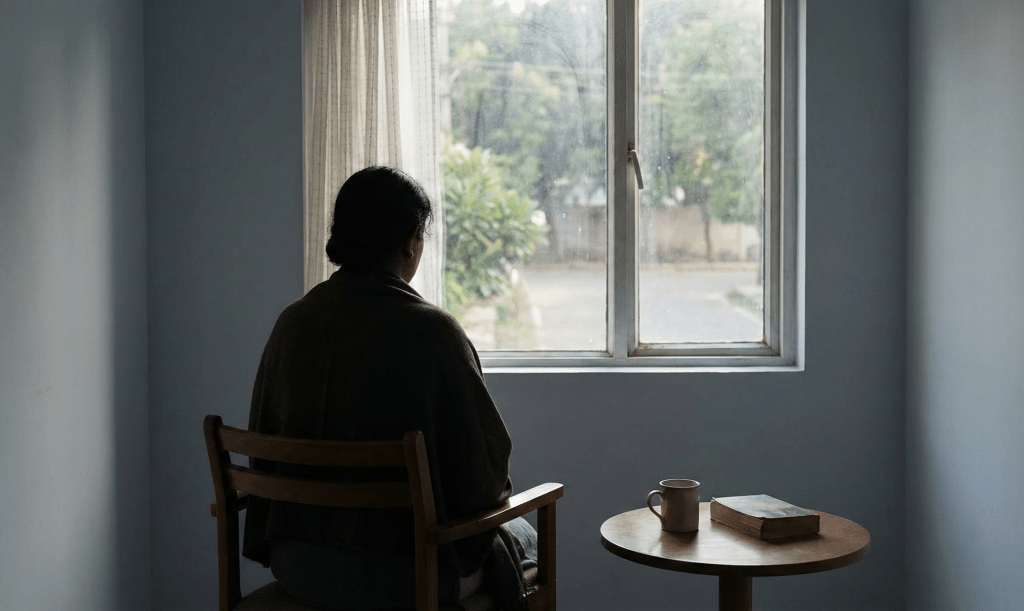
Image Note: The illustration for this article is AI-generated and is intended to visually represent themes of reflection and uncertainty. No real individuals are depicted.
You may wish to read these next:
 Dr. Maria K. Jimmy